Introduction
Think, for a moment, of your first memory of music. Perhaps your memory is vivid – some time when an artistically-inclined relative was serenading you with a piano reduction of the ‘Sesame Street’ theme. Or maybe you remember a preschool sing-a-long with absolute clarity, waving your hands around in sync with the strum of a guitar or the punch of a tambourine.
 More likely, your first memory of music is like mine: you can’t quite put your finger on it. Instead, your brain conjures an assortment of grayish puzzle pieces - lullabies your parent(s) sang or melodies you heard regularly at religious services. How do you feel thinking about something like this? An overwhelming sense of happiness? Melancholy?
 My mom used to sing “You Are My Sunshine” to me before bed. Whenever I hear that song now, tears foam up in the corners of my eyes. For me, it’s a combination of love (for my mom, but also for life and love itself), hope, nostalgia, and even regret. The power of this simple song – and an admittedly campy song at that – touches me on a deep and personal level. Depending on the circumstances, I might pull myself away, reminding myself that ‘it’s only a song.’ Occasionally, I will let the emotions keep me in a trance until the song is over.
All of the feelings and emotions when we hear music – be they sincere joy of life, irrational anger, memories of a high school crush, or just a primal urge to get up and dance - are the result of the musical brain at work. Our brains tell us whether we like music we hear, how to interpret it, whether or not we should do something because of it, etc. In other words, music’s place in any culture (and as far as I know, all cultures have ‘music’) is intricately and innately connected to the brain.
The following post is a mildly-informed mixture and summary of research I have done recently on musical qualities of the human brain, how these qualities came into existence, how our species conceptualizes them, and how their levels of functionality vary widely between individuals.
Getting Started
There is a wonderful episode of WNYC’s RadioLab podcast (Jad Abumrad is becoming one of my heroes) entitled ‘Musical Language’ and dealing with precisely this subject – how we process music. Perhaps the best thing to take away from the show is the idea of “sound as touch (at a distance)” – that everything humans hear is a result of sound waves entering (touching) our ears.
When it comes to music, the physiological facts related to this initial stage of sound entry are pleasantly straightforward. In other words, getting to the brain is the easy part: sound passes through the outer ear, resulting in vibrations of the eardrum – now in the middle ear. Consequently, small bones (ossicles) attached to the eardrum send sound waves to the inner ear. There, inside the cochlea, hair cells send neural impulses through the brainstem and into the auditory cortices of the brain. This entire process – from outer ear to brain, takes roughly one hundredth of a second (according to various sources, including Tramo).
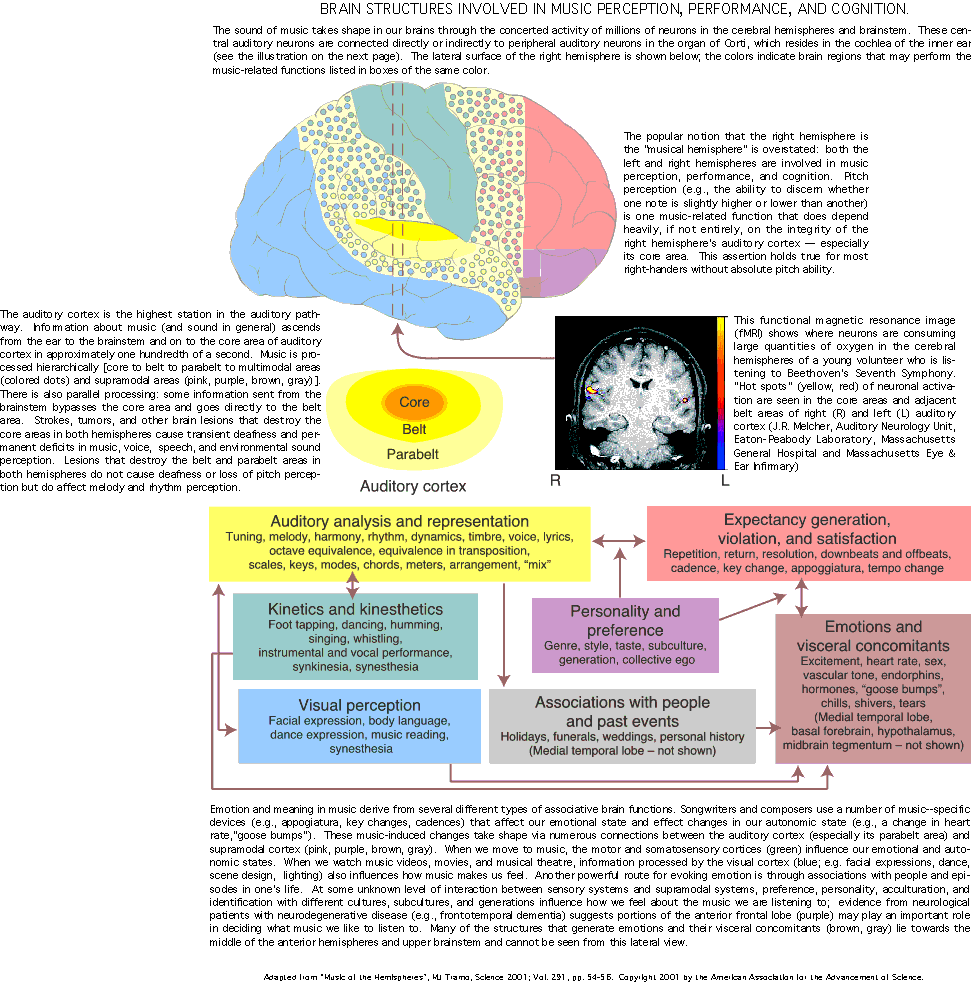
Once in the brain, things get much more complicated. Traditionally, it was thought that the right hemisphere of the brain was the more musical of the two. We now know that both are crucial to music cognition, with the right hemisphere typically having a larger hand in pitch perception and the left holding more keys to rhythm processing. Simply put, there is not one part of the brain specifically assigned to music. In contrast, the various lobes and cortices are all active, often functioning according to the ways in which they ‘normally’ would. For instance, the occipital lobe (containing the visual cortex) plays a significant role in processing musical notation or perceiving facial or bodily expressions on others (Tramo). Notice, however, that functions are totally dependent on context. Listening to Javanese gamelan will trigger a different brain response than playing Javanese gamelan or dancing with Javanese gamelan. Likewise, brains of different individuals will respond differently to the same music, which explains – to an extent - music preference. How much of this is a process of enculturation is more of a mystery – and a topic to which I will return.
Also unknown are answers to many other important questions. For instance, how large is the role of individual psychology in comparison to the physiology of our species? We know that the loss of brain functions can indeed have significant effects on musical perception/cognition, but these effects vary substantially among individuals. Furthermore, we do not know exact physiological bases (if there are any) for many music-related conditions, running the gamut from perfect pitch to musical hallucinations.
Finally, the endlessly debatable question: at what point does sound or language become music? Of course, this is open to interpretation. But for the purposes of this post, let’s come up with a working definition of music. Typically, we can all agree on whether or not something is music. The sound of opening a refrigerator would probably not fall into most definitions, whereas a string quartet by Schoenberg probably would. Either of these would be determinable according to the Merriam-Webster definitions of music: “the science or art of ordering tones in succession, in combination, and in temporal relationships to produce a composition having unity and continuity” and “vocal, instrumental, or mechanical sounds having rhythm, melody, or harmony” (Merriam-Webster Online). But these definitions become rather vague when you take, say, John Cage’s “4’33’’.” And what about non-human sounds such as birdsong or coordinated frog croaks? Furthermore, as Ian Cross and Iain Morley write in The Evolution of Music, “…where a term exists in a non-western society that embraces the activities that a western musicologist might conceive of as musical…that meaning tends not to differentiate between music and dance” (7). Cross and Morley go on to provide their own working definition, conveniently leaving much room for error:
“Hence music might be defined broadly and operationally as embodying, entraining, and transposably intentionalising time in sound and action…typically being expressed by means of voices and instruments that articulate patterns in pitch, rhythm and timbre, and involving correlated gestural patterns of movement that may or may not be oriented towards sound production….The broad definition is intended to delineate those attributes that, in every community, appear to distinguish music from other spheres of human activity, in a way that might enable its relationships to cultural and biological processes to be evaluated” (10-11).
Their definition highlights two key elements that are vague in Merriam-Webster. First is the fact that music must exist in time, and second is the idea of intent. Even in non-western cultures that do not differ between music and dance (Cross and Morley cite the Igbo people of southeastern Nigeria as an example), there is certainly an awareness that the resulting activity is wholly separate from other sounds or forms of communication. Moreover, there is a conscious intent to participate in the activity.
Appropriately, my favorite definition of music comes from one of my favorite musicians, Frank Zappa. In The Real Frank Zappa Book, he posits that “anything can be music, but it doesn’t become music until someone wills it to be music, and the audience listening to it decides to perceive it as music” (141). Here, intent is the entire focus, for either the creator of the music or the ‘audience.’
My working definition here is a short and simple combination of the above definitions: I believe music is sound (or, in some cases, a lack thereof) existing in time and consciously intended to be ‘music’ or a cultural equivalent (such as the music/dance of the Igbo), honestly distinguishable by at least one individual (often, but not necessarily, its creator) from other noises or forms of communication (such as speech). Note that this definition does not include non-human sounds, because as far as we know, other species do not consciously distinguish between music and other sounds. However, this definition could include the fridge-opening example, if the opening is done or perceived (honestly) in such a way as to distinguish it from the simple noise made when we go to grab a leftover tuna sandwich. Note that he honesty is a key component of my definition. If I pound my fist on a table and call it music, it is not necessarily so unless someone (probably, but not necessarily, myself) truthfully and consciously perceives it as music.
Evolution of the Musical Brain
There is an ongoing debate over whether our species first developed music or language. While music – using our working definition – probably came after more primitive forms of communication (such as those evident in animals), what we now consider language is far more advanced. Perhaps, then, the question of which came first is the wrong question to be asking. Cross and Morley go as far as to suggest that “language and music are at complementary poles of a communicative continuum, meeting somewhere near poetry” (10). This is an interesting interpretation, but it may be misleading to consider music and language too closely related. It is safe to say, however, that neither could have developed without the evolution the human brain. Daniel Levitin’s book The World in Six Songs tackles this subject in depth. He speculates:
“It is unlikely that either language or music was invented by a single innovator or at a single place and time; rather, they were shaped by a large number of refinements, contributed to by legions of developers over many millennia and in many different locations. And they were no doubt crafted upon structures and abilities that we already had, structures we inherited genetically from protohumans and our nonhuman animal ancestors” (15).
Levitin goes on to hypothesize that the human brain’s capacity for both music and language was a result of “the evolution of a particular brain mechanism.” He underlines three characteristic cognitive abilities as a result of this mechanism: “perspective-taking,” “representation,” and “rearrangement.” Additionally, Levitin believes these abilities gave humans the necessary tools (literally and figuratively) to create other forms of art as well.
But when did it all happen? When did the human brain develop this all-important mechanism that prepared us for music? This is another big mystery. Even archaeological findings cannot necessarily pinpoint earliest known instruments. Fully functional bone flutes (with scales still playable!) found in China have been dated back to a Neolithic site from 9000 years ago (Brookhaven National Laboratory). But other evidence suggests that humans were musical long before then. Relatively advanced bird bone flutes have been found in Europe dating back to 30,000-40,000 years ago. While there have been multiple findings of these Paleolithic aerophones, there is some disagreement over how many of them constitute musical instruments. Some sources suggest that at a few of these “instruments’ may have actually been chewed bones, perhaps the remains of a tiger’s mid-afternoon snack. Generally, however, the quality of the findings suggests otherwise. As Cross and Morley write:
“…the sophistication of these instruments exceeds that of many mediaeval and contemporary examples…It seems likely that when modern humans arrived in Europe around 40,000 years ago, they had already developed instrumental musical behaviours; it is likely that instruments were in use far earlier, and that musical behaviours that made use of the voice and body movements had a long history prior to the development of musical artifacts” (16).
Levitin echoes this idea, citing Ian Tattersall’s description of seasoned visual art artifacts and the “exquisite sensitivity to [their] properties.” He continues, explaining that the degree of refinement suggests that they had been around for much longer than archaeology can prove:
“The artistic remnants that have been left behind – carvings and paintings – show such sophistication and power that it is likely that they were not our ancestors’ first attempts at art. Rather, they are the lucky ones that survived, and there clearly must have been a great number of refinements and improvements that led to these. Art, in other words, must have existed for tens of thousands of years before the earliest artifacts we’ve found” (252).
There is a degree of uncertainty as to the use of early human artistic sensibilities. Early cave paintings, for instance, may not have been displayed to others in anything resembling a modern art gallery. Instead, they may have been tied to shamanistic beliefs about embodying animal energy before a hunt. Or they could have served as a teaching tool – an early textbook to teach children which animals were safe. Similarly, early human perception of music may have been quite different than modern conceptualizations. Perhaps flutes were originally designed as a tool for mimicking bird sounds to attract fowl-eating mammals – an advanced hunting trick. This leads to the question of what constitutes music, and according to our working definition, a hunting tool might not necessarily equal a cultural equivalent of music (this is arguable). However, it is also entirely possible that flutes served many purposes, including but not limited to helping hunters. This is all speculation, so I will leave it open to debate.
That being said, it is certainly possible (and maybe even likely) that humans had developed some forms of music, art, and language before migrating out of Africa. Assuming that Levitin’s brain mechanism theory is (loosely) true, it would be fair to say that anatomically modern humans gradually developed these abilities at the same time – over the course of thousands of years and alongside the evolution of the human brain.
Now, then, the question becomes why. Obviously, language has become an essential part of our species’ communication, and there are countless advantages to having it (as opposed to less advanced forms of communication such as our birdcall example). But were there evolutionary advantages to music as well? Did natural selection favor the musical brain over the non-musical brain? Of course!
The brain ability to process and participate in musical activities undoubtedly had many evolutionary advantages. Even Darwin recognized this, although he theorized that musicality served its greatest advantage in mating songs (think “I Want to Hold Your Hand”) and their promotion of sexual selection. Cross and Morley cite this, but are also quick to mention that there may be other factors at play:
“…this logic implies that any musical trait for which there is a preference will subsequently be selected for by sexual selection…by definition, selection, sexual or otherwise, for a particular trait can only occur if that trait can arise by mutation of a gene and be inherited. Behaviours and skills…can be transmitted in other ways. Also, if sexual selection was actually responsible for the evolution of motives that cause most humans to find features of music aesthetically appealing, then we would expect convergence in behaviours of musical expression, and in the aspects of them that give pleasure. In fact, whilst musical behaviours are found in all cultures and share dynamic features and social motivations and uses, aesthetic preferences are often culture specific” (6).
On a related note, it is important to note that the key here is the evolution of our brains as musical entities – not evolution of the music itself. While many kinds of music have gradually changed, calling this evolution – in the Darwinian sense – is pure speculation and (depending on context) unneeded ethnocentrism.
In any case, the most compelling arguments for natural selection’s preference toward a musical brain revolve around group selection. Groups of early humans with developed musical brains would hold a strong advantage over those without musical them. But this in itself has many underlying factors.
First, music helps keep a group of people together. As Cross and Morley write, “Music promotes group cohesiveness” (2). Collective functions like singing and dancing are necessary mood-altering activities – they help us bond with one another in ways we could not otherwise. I recently went to a concert down here in New Orleans – a relatively new band called 101 Runners that – at any given time – incorporates at least four percussionist, a guitarist, baritone saxophone, piano, and sousaphone. Additionally, their upbeat brass-band-inspired music would not be complete without their vocalists (at least two per song). Each song included some sort of simple chant accompanying the music, such as their opener, when the entire audience sang “Put up the one” while waving index fingers above their heads. This is a perfect example, because without the music – the rhythms of the drummers and the funky yet simple harmonies of the melodic instruments – the same kind of group bonding (chanting and hand motions, but also smiling and dancing) could not have taken place.
Levitin points out that there may be a chemical explanation for this kind of tight-knit group bonding experience in response to music:
“Listening to, and even more so singing or playing, music can alter brain chemistry associated with well-being, stress reduction, and immune system fortitude. In one study, people were simply given singing lessons and their blood chemistry was measured immediately afterward. Serum concentrations of oxytocin increased significantly. Oxytocin is the hormone released during orgasm that causes us to feel good. When people have orgasms together and oxytocin is released in both, it causes them to feel strong bonds toward one another….Significantly, also, oxytocin has been found to increase trust between people. Why oxytocin is released when people sing together is probably related evolutionarily to the social bonding function of music…” (98)
This kind of group bonding was not all about individual happiness, either. A tightly-knit group is more apt to effectively care for its sick and dying members, share food after an exhausting hunt/workday, or help raise children.
Furthermore, the ambiguity of music (which Levitin often mentions) enables groups of people to sustain organized and long-lasting communities in a way that language would not. Conflict resolution, for instance, is more safely done through songs than through speech. Take a look at a modern example: back-and-forth insults between rappers. When these shots are laden within a vague musical context before firing, it is much less likely that someone will be hit with a real bullet.
Along similar lines, Cross and Morley discuss music’s ability to facilitate humanity’s need for playful and childish behavior - us adults have to play hard too. “We suggest that an increasingly altricial lineage,” they write, “the need to accommodate to population structures with an increasing proportion of members with access to juvenile modes of cognition, motivation and behaviour…may have favoured the emergence of something like musicality as a means of assimilating the value of those juvenile modes of exploratory cognition into the adult behavioural repertoire while regulating its modes of expression” (15). Simply put, music has helped us release our inner children in calm and practical ways (one could argue that this has become a matter of social acceptability). It keeps us sane!
Levitin cites a community in the Brazilian rainforest – the Mekranoti – to highlight another element of group selection, superiority over other groups. Mekranoti people sing for many hours per day, beginning in the morning when the men wake up early and partake in a lengthy ritual of loud song and vigorous movements. But more than simply establishing emotional bonds between the men, their organizational abilities – proved by the music/dance – send a clear cut message to other rainforest groups: ‘We’re ready for battle.’ “Through singing, especially in harmony,” explains Levitin, “the Mekranoti can give the impression that their numbers are even greater than they actually are….its demands also indicate that they are aware and sensitive to the physical and mental states of each member in the group – an awareness that could create a formidable military defense if called to fight” (48).
Battle music – military marching bands, war songs, beating on drums, etc. – has been of vast importance throughout the history of mankind. Levitin writes a beautiful passage – of which I will try not to quote too much – in which he speculates how an early human surprise attack could have taken place. In his scenario, the musical group prepares themselves for battle through music, bonding together and pumping themselves up through drumming and singing. The powerful vibrations and sounds of sticks hitting a skin membrane probably would have triggered a chemical response making this group more enabled for the upcoming fight. Additionally, it would have resulted in an added bonus – stunning the enemy! (Levitin 41-45)
Recent times have seen different uses of war music, aided by the modern dawn of recorded music. United States troops used music in the process of capturing former Panamanian oppressive dictator Manuel Noriega. In a standoff with Noriega, the dictator sought refuge in the papal embassy. Trying to force Noriega out, the American military proceeded to play loud rock music out of large boom boxes. And while they turned off the music at the request of “the Vatican and the diplomatic community” (Cole 61), Noriega did eventually surrender.
Another example – even more morally questionable – comes from the United States’ uses of music as a torture device against Guantanamo Bay prisoners. Suzanne G. Cusick discusses this in more detail:
“As early as May 2003 the BBC reported that the US Army had used Metallica’s ‘Enter Sandman’ and Barney the Purple Dinosaur’s ‘I Love You’ in the interrogation of Iraqi detainees, playing the songs repeatedly at high volume inside of shipping containers. Documents obtained by the ACLU include an email from an unidentified FBI agent, dated Dec. 5, 2003, that describes at least three incidents involving Guantanamo detainees being chained to the floor and subjected to ‘extreme heat, extreme cold, or extremely loud rap music.’”
I can certainly imagine my discomfort in hearing the Barney theme repeated endlessly, but I cannot imagine what it would have been like for these prisoners. Not only were they forced to hear such awful music. For them, their experience was intensified by cultural differences. During my final semester at Macalester College, I took a class on music and culture of Central Asia and the Middle East. We touched on the issue of music as torture – particularly pertaining to the Iraq war – only briefly. But this was powerful enough to leave a substantial imprint in my brain. I remember being somewhat surprised at first by a playlist of songs used in this torturing process. It including artists like Metallica and Christina Aguilera, musicians who are cherished in the Western world. If I had to (I certainly do not want to) pick a torturous playlist, I would probably start with Frank Zappa’s Jazz From Hell, the Japanese rock duo Ruins, or guitarist Mick Barr. But then again, these were different circumstances; US troops would have wanted something they could bear at excruciating volumes and for long periods, yet something to drive the prisoners bonkers. The most effective, vicious, and cruel attack was one directly based on cultural differences. Christina Aguilera’s song “Genie in a Bottle,” for instance, features a teenage girl singing sexually suggestive lyrics and (arguably) promoting sexual promiscuity and freedom. This, even to Westerners, raises eyebrows. Imagine what it would have been like for Muslim men already under the stress of imprisonment, taking into consideration that much of Islamic culture looks down upon sexual expression (especially among women, who may be required to wear burqas outside of their homes).
“In December 2005,” Cusick explains, “Human Rights Watch posted brief first-person accounts of detainees released from a secret prison in Afghanistan, many of whom asserted that part of their experience included being held in a pitch-black space and forced to listen to music that they described, variously, as ‘unbearably loud,’ ‘infidel,’ or ‘Western.’”
On a crucial side note, I am a pacifist and do not subscribe to or believe that torture is an appropriate course of action under any circumstances. And certainly, I do not believe that torture is an appropriate place for music – especially against the will of the artist. Nevertheless, it provides us with a powerful look at how music has indeed been used in modern warfare techniques.

Fortunately, anti-war music has been even more important in recent history. Also tied to social bonding, music that opposes war, oppression, and hatred has had a powerful impact on the globe. I was in a punk band throughout much of high school and was strongly influenced by the band NOFX during the Bush administration’s actions leading up to (and during) the war in Iraq. One of my favorite NOFX songs, “Franco Un-American,” doubly serves as a piece of social commentary and a yearning to comply with (at the time) France’s refusal to assist in a war of unjust causes.
While it would be misleading to say that modern musical warfare (or even anti-war songs) carries evolutionary advantages, music’s place in the history of wartime may have.
But back to the grander point, musical brains have generally held more advantages leading to group selection. Clearly, groups of early humans more closely fused together through musicality would have had evolutionary advantages. They would be happier, better equipped to organize themselves in hunting or battle, better at conflict management, and more likely to tend to the sick or assist in the raising of each other’s children.
Musical brains probably had some additional perks leaning toward natural selection on an individual level. Most significantly, music may have bolstered early childhood development.
Lullabies, as I discussed earlier, are some of the earliest pieces heard by humans. They provide our species with a sense of comfort and reassurance, helping us adjust to a strange new existence. These soothing songs also play a pivotal role in our understanding of emotions, particularly at an age when we do not have a fully-developed capacity for language. Cross and Morley discuss the benefits of music’s ambiguity at the stage of infancy:
“…proto-musical and musical behaviours retain a degree of ambiguity or transposability in their ‘aboutness,’ particularly in the ‘babbling’ stage…This is evident in the capacity of pre-linguistic utterances to reflect, or to engage with the temporal dynamics of, the joint actions, physical events, experienced affective states and changes of affective state that can be shared in social exchanges. The elements of proto-musical behaviour can be associated, for the infant or child, with any or all of a wide range of types of event in their experience of the world and with other people” (12).
Throughout early childhood, music similarly has advantages as a teaching tool. Take, for instance, the alphabet song or other songs that encode information for young children. I remember a sixth grade assignment in which students were tasked with offering the best memorization tool for the order of American presidents. The winner – hands down – was a song with each president’s surname was sung, in order, to the tune of “Rudolph the Red-Nosed Reindeer” (I notated the first few bars in the figure below).

Music is inextricably now a part of learning in virtually every culture. In “The World in Six Songs,” Levitin provides countless examples of “knowledge songs,” one of six overarching types he identifies (this idea of separating all of the world’s songs based on function is somewhat peculiar and another matter entirely). And they are not necessarily limited to songs with important information. Some, such as “There’s a Hole in the Bottom of the Sea,” help children strengthen neural pathways through additive lyrical stanzas or other memorization techniques. Assuming that these kinds of songs existed in early human societies, they surely would have played a role in natural selection of the musical brain.
Listening to Music
For much of human history, music was a participatory activity. Even people who were not singing or playing instruments were dancing, socializing, or taking part in rituals. Only in the past few hundred years – and more recently in many parts of the world - has “active listening” become part of our culture. The advent of recording technology and the idea of composing music meant for careful listening – laden with small and intricate themes and details (think Beethoven) – has resulted in what we might think of as ‘listening to music.’
That being said, the (passive) activity of listening remains a brain phenomenon in itself. Remember, as I explained earlier, how we hear sound: hair cells in our inner ears send neural impulses into our brains. The sounds we hear, in other words, are a result of our ears, neurons and brain working together to encrypt (so to speak) sound waves so that they are recognizable to the humans. This is why the human ear cannot necessarily hear everything on our planets. Dog whistles and sea mammal sonar exemplify high frequencies above any human’s range. Likewise, low frequency sounds are sometimes easier to feel than they are to hear (think bass drums). Sources differ slightly, but all pin the human hearing range between about 20 and 20,000 hertz (measurement of frequency).
Astonishingly, despite the similarity in frequency range among most humans (with few exceptions), our brains tend to respond differently to the neural impulses. Even more interesting is the fact that these impulses are somewhat ‘musical’ themselves. The RadioLab podcast cited earlier (let me again put in a pitch for RadioLab’s awesomeness) has a wonderful segment on this. Hosts Jad and Robert interview Mark Jude Tramo (also cited earlier), a neuroscientist who has actually been able to record sounds of electricity going into our brains. These sounds actually differ depending on the music we listen to and what we think of it. When we like what we hear (the podcast uses a harmonic perfect fifth as an example), the electrical impulses are transmitted at a regular, steady pattern – resembling a consistent musical tempo! Conversely, when something sounds unpleasant (RadioLab example: harmonic minor second) to our ears, the impulses become irregular.
We consequently tend to feel awkward or frustrated when we hear music that is not to our taste. In rare circumstances, we even tend to feel angry. Two of my college roommates once went to an avant-garde atonal concert as a course requirement for Music Appreciation. They came back – not bored, exhausted, or strained – but downright furious.
Another RadioLab guest, neurologist Jonah Lehrer, recounts the ultimate version of music-inspired madness and mayhem: the debut of Igor Stravinsky’s “Rite of Spring” – a musical ballet telling the story of a ritual murder. Stravinsky (pictured here on the right, courtesy of Classical Net) packed the score with tritones, screeching winds, and a constant, dissonant
 pulse on strings. Jump back to the opening night – 1913 – when much of the musical world was still riding the waves of Wagner’s late romanticism. Stravinsky’s innovative dissonance and compositional techniques were unfathomable, not to mention unheard. Listeners’ brains would have been overloaded with irregular neural impulses. The result of the ballet’s debut, as you might guess, was mayhem. As Lehrer explains, “After about three minutes, [the audience] rioted…They screamed, there was blood, old ladies were hitting each other with canes…” Legendary minimalist composer Philip Glass wrote about Stravinsky for Time Magazine’s 100 People of the 20th Century. Clearly, the “Rite of Spring” debut was not a story to forget:
 “Trouble began with the playing of the first notes, in the ultrahigh register of the bassoon, as the renowned composer Camille Saint-Saens conspicuously walked out, complaining loudly of the misuse of the instrument. Soon other protests became so loud that the dancers could barely hear their cues. Fights broke out in the audience” (Glass).
Perhaps most surprising is what happened the following year: “Rite of Spring” came back to the same Paris theater at which it incited such mayhem. And this time, people loved it! The rest is history, with Stravinsky becoming arguably the most influential composer of the century, making his mark on music for years to come.
Neurologically, as Jonah Lehrer points out, this could have huge implications. What happened to the brain impulses during the second performance? Is it possible that we can train our brains to enjoy music? Maybe this would explain an experience I have had on many occasions; I buy a CD, and cannot stand it at first. But over time – often many listens – either by stumbling upon the disc later or forgetting to eject it from my stereo – I begin to enjoy it. The music just seems to grow on me. Is this the result of neural impulses changing over time – or at a bare minimum, the result of my brain learning to expect them?
Differences in the brain’s interpretation of electrical impulses may be a partial explanation for music preference, especially if musical enculturation affects these brain responses. Even if not, our musical tastes are certainly embedded somewhere in our brains. Our music preferences often play key roles in defining us as individuals (Why else would Facebook profiles contain a ‘Favorite Music’ section?). And for good reason – your music is yours and only yours. No two people on the planet have the same iPod libraries, nor could we predict with complete accuracy what any individual would like.
Nonetheless, there have been studies on the link between personality and music preferences. Rentfrow and Gosling, researchers at the University of Texas, found in a large experiment of students that taste for broadly-defined genres may be linked to personality traits. For instance, they found a positive correlation between “intense and rebellious” music preference (“genres that are full of energy and emphasize themes of rebellion” e.g. punk or alternative) and “openness to new experiences, self-perceived intelligence, verbal (but not analytic) ability, and political liberalism” (1241-1256).
There are obviously other factors, many of which may also be influenced by brain activity. Cultural differences and developmental experiences obviously play roles in music preference as well; I often attribute my love of modal jazz in part to ecclesiastical modes found in my childhood church hymnals. Rentfrow and Gosling also point out the fine line between our musical tastes and what we actually listen to. Often, they suggest, we tend to play loud music as a kind of “badge” (think of what you might hear coming from a lowrider subwoofer). It might not be music we would listen to otherwise, but it is still an important part of our respective collections.
Some of Tramo’s research suggests that there may be elements of universality in music preference. As mentioned earlier, there are certain intervals that will cause consistent neural impulses in the path from ear to brain. And while it may be possible to ‘train’ our brains to expect or tolerate other musics with more dissonance, ‘training’ brains to dislike pleasant intervals (such as the perfect fifth) might not be possible. Luckily, physics gives us a viable hypothesis for this: the overtone series. Whenever we hear a pitch, we are actually hearing many pitches – a “fundamental” tone (what we think of) and many subtle overtones. Not surprisingly, the second overtone we hear (after the fundamental in a higher octave) is the perfect fifth!
On a quick tangent, I want to mention that the overtone series is not in any way evidence favoring certain musical traditions over others. Some uninformed individuals have tried to use the overtone series to prove superiority of Western tonality over other musics. In reality, the major and minor keys of Wesern tonality are descendents of the ecclesiastical modes – identical to Ionian and Aeolian modes, respectively. Other modes (including the Mixolydian, which actually corresponds more closely to the overtone series) were largely forgotten, only used sparsely today in comparison to the others. Similarly, other scales and modes around the world (e.g. Indian ragas) bear some resemblance to the overtone series while also grounded in corresponding cultural traditions.
Regardless, our music tastes remain completely individualized. Nobody has exactly the same taste as anyone else – and many of us use music for entirely different purposes. Some people will mosh to Metallica, while others might prefer unwinding to Master of Puppets with a beer and beanbag chair.
Likewise, hearing ability itself differs among individuals – like vision – and often deteriorates in old age. This deterioration, the (partial) loss in ability of our ears to send impulses, often has some peculiar side effects. World-renowned neurologist, physician, and music aficionado Oliver Sacks describes many of these in his book Musicophilia, essentially a collection of patient case studies.
In a length chapter, Sacks focuses on musical hallucinations, which most often occur in the elderly and/or patients who have suffered hearing loss. When most of us think of songs in our head, we have some sense of control over them. We may have excruciatingly annoying choruses or melodies playing over and over, but we can at least distinguish them from music we are ‘actually’ hearing. I remember, for instance, two weeks in high school when I could not for the life of me expunge the Backstreet Boys’ “I Want it That Way” from the depths of my imagination.
True musical hallucinations are even more vivid. People who experience them feel as though they are hearing something outside their heads. Hence, their supreme vividness makes them quite different than simple earworms (e.g. the Backstreet Boys example). Sacks describes one patient – an elderly woman suffering from progressive nerve deafness who had been prescribed prednisone to cope with her hearing loss:
“Mrs. C took a gradually rising dose of this for a week, and during this time she felt fine. But then, she said, ‘on the seventh or eighth day – I was up to sixty milligrams by then – I woke up in the night with dreadful noises. Terrible, horrific, like trolley cars, bells clanging. I covered my ears, but it made no difference…’ Her first thought, indeed, was that a fire engine had stopped outside the house, but when she went to the window and looked out, the street was completely empty. It was only then that she realized that the noise was in her head, that she was hallucinating…After about an hour, this clangor was replaced by music: tunes from The Sound of Music and part of ‘Michael, Row Your Boat Ashore’ – three or four bars of one or the other, repeating themselves with deafening intensity in her mind” (49-50).
The most sensible explanation of these symptoms (with some exceptions) is that our brains essentially trick us in order to remain active. In other words, if a region of the brain is left with nothing to do as a result of some disability/accident/change, it often recreates its own functions. For example, amputees often feel physical sensations in their lost body parts – a condition called ‘phantom limbs.’ Brain mapping has shown that these are often a result of parts of the brain recreating functions. Essentially, the sensation of feeling poked in the arm can still exist without the arm itself because the brain region formerly in charge of that arm remains active.
In comparison, Sacks explains, “Hallucinations of many sorts, including musical ones, may also occur if the senses and the perceptual systems of the brain have too little stimulation” (74). Later, citing Jerzy Konorsky, he continues:
“…there are not only afferent connections going from the sense organs to the brain, but ‘retro’ connections going in the other direction. Such retro connections may be sparse compared to the afferent connections, and may not be activated under normal circumstances…if there is a critical deficiency of input from the sense organs, this will facilitate a backflow, producing hallucinations physiologically and subjectively indistinguishable from perceptions” (77-78).
Furthermore, a peculiar quality of music in our heads (hallucinations or otherwise) is its precision. When we replay music in our heads, it is stunningly similar to the ‘original’ version we heard, right down to pitch accuracy. Perhaps this explains why Sacks’ patient heard only a few repeating measures of “Michael, Row Your Boat Ashore.” When we forget portions of a melody, the brain does not reconstruct it. This is a fundamental difference between musical memories as opposed to other memories of language or vision. When we recall a memory of going to the grocery store, we reconstruct the entire store; we do not picture empty or black spots for all the food items we cannot remember. But when we think of Beethoven’s 5th Symphony, we do not reconstruct the entire piece. Instead, we remember the opening eight notes (and perhaps other passages) with utmost accuracy, omitting everything else.
Musical memories are also unusual in both their spontaneity and accuracy. Sometimes we recall songs that we have not encountered for years. Sacks describes this beautifully: “As I was dressing this morning after a swim, I was reminded…of my painful, arthritic old knees…With this there suddenly popped into my head an old nursery rhyme that was popular in my childhood but that I had probably not heard (or thought of) for two-thirds of a century: ‘This Old Man’” (36).
The accuracy of musical memories is particularly fascinating in people whose brains are failing in other areas. I visited my grandfather during the holiday season of 2006. He would go on to die later that winter, and by this time was already having trouble recalling names, places, and events. His mind and body were clearly failing. As a gift, my parents had purchased a CD player and some old big band jazz recordings, like Glen Miller and Duke Ellington. This was music he had adored many years ago, but I had never seen him listening to it. After setting the player up in his assisted living apartment, we tossed on a recording of Glen Miller’s “Chattanooga Choo Choo.” Amazingly, my grandfather – who could not recall where I was going to college and kept his television at full volume due to hearing loss – remembered the entire song. He sang along with every word, whistling through the instrumental breaks and tapping his foot to the beat with perfection. It was as if he had morphed into a jazzy 1940s night-clubber exclusively for the duration of the song. We were shocked. (His nurses later said that the CD player had given him much joy in his final months.)
My grandfather’s recollection of “Chattanooga Choo Choo” was splendid in his perfect, in-tune whistling and singing. But his perception of the rhythm – the pulse of the big band’s beat – was least surprising. When we listen to any music, we tend to make sense of it. “An intrinsic component of such participation,” Cross and Morley write, “is ‘entrainment,’ which involves the co-ordination in time of one participant’s musical behaviours with those of others. This process appears to involve the perceptual ‘inference’ or ‘abstraction’ of a regular periodic pulse or beat from a sequence of rhythmic events and the intuitive or cognitive organization of the timing of actions and sounds around the motivating pulse” (8.) This explains how we can dance with a rhythm. Our brains do not need to hear every beat to extract and expect when the next one will come. Instead, we are ‘wired’ to predict the next beat. If we are tapping our feet (like my grandfather), our feet are already in the midst of the tapping motion before the beat arrives. This way, our feet will actually land on the ground according to the pulse.
Clearly, however, brains differ in their abilities to extract pulses and beats. Have you ever been to a concert where the audience began clapping with the music, only to fall apart when many audience members began to speed up? This is an area that deserves much more research and one that I am particularly interested in as a percussionist. Is there a natural predisposition for certain kinds of pulses or beats? Necessary and instinctual elements of human life – such as bipedalism and sexual intercourse – are often based on constant back-and-forth motions. Is this why so much of music tends to be split up in rhythmic groups of two or four? Many of these motions can, however, be performed in more ‘irregular’ pulse patterns. This leads me to believe that there may be some level of other factors (such as enculturation) involved. Indian talas (beat patterns), for instance, are divided up into a wider variety of rhythmic types (e.g. 2+2+3 repeating or 2+2+2+3+5 repeating) than much of Western popular music. Similarly, West African rhythms are laden with polyrhythmic structures. And composers like Stravinsky and Edgar Varese filled their music with polymeters. American composer Charles Ives even wrote pieces for separate orchestras playing separate pulses simultaneously. In this case, do our brains extract one pulse, or many? How do we feel the rhythmic patterns differently? Does exposure to irregular rhythms at an early age play a role in ‘pulse entrainment’ abilities? These are difficult questions, and worth exploring in future blog posts.
Brains of Modern Music-Makers
Music’s impact on the brains of non-musicians is overwhelming. Brain activity of musicians themselves has the same impact…and then some! In addition to the elements of listening, memorization, socializing, and movement, musicians’ brains also must work creatively, and the concentration required is far greater. Furthermore, the time commitment is enormous. In Outliers, Malcolm Gladwell estimates that the most famous Western composers all had upwards of 10,000 hours of practice before making their respective marks. Similarly, in Miles Davis’ autobiography, he recalls practice habits of the legendary John Coltrane:
“After the gig he would go back to his hotel room and practice while everybody else was hanging out. He would practice for hours after he had just got through playing three sets…He had always been serious about music and practiced a lot. But now it was almost like he was on some kind of mission…So he was only really concerned about playing his music and growing as a musician. That’s all he thought about” (223-224).
With today’s onset of digital audio formats and CD burning, musicians have little hope of ‘making it’ professionally (I can vouch for this). And yet despite the excruciating amount of necessary brain power, the demanding practice regime, and the emotional investments, people still create new music every day, committing themselves to a field in which success is so sporadic. Is there a physiological explanation for what makes musicians so dedicated? And furthermore, are the brains of musicians different in any way from other people?
The first of these questions – perhaps – ties back to the discussion of evolutionary bases for musicality. The ability to make music in itself has evolutionary advantages – which is why virtually all humans enjoy and/or use music to some degree. For music-makers, the evolutionary advantages are coupled with direct benefits. And these are far greater than Darwin’s idea of sexual selection (although it may play a role from time to time). In other words, playing music is much more than a highly-evolved mating call or feather display. On the contrary, musicians often consider their art form deeply personal or spiritual – quite the opposite of a mating call solely for the purposes of attracting others. As Davis writes of Coltrane, “He couldn’t be seduced by a woman’s beauty because he had already been seduced by the beauty of music, and he was loyal to his wife” (224).
For many musicians, there is something that draws them to play music – a drive to continue fingering rhythms, singing melodies, or waling away on scales. What is this mysterious drive? The simplest way of putting it for most musicians would be ‘feeling good.’
There are plenty of chemical and physiological explanations for why music makes musicians feel so good. Levitin – as explored earlier – explains that singing has resulted in increased levels of oxytocin (again, the same hormone released during orgasm). He also discusses chemical bases for music’s effects on physical health. For instance, levels of immunoglobulin A (crucial to the immune system), melatonin (which helps maintain us maintain circadian rhythm), and both norepinephrine and epinephrine (which “affect alertness and arousal, and activate reward centers in the brain”) have all increased during music therapy studies (Levitin 98-99).
In response to the chemical changes coming from playing music, musicians often feel an extreme sense of focus, a rush of euphoria, or a deep electricity unparalleled in other daily activities. Levitin writes of college marching bands as an example:
“Although to an outsider marching drills may seem repetitive and boring, the participants often experience a kind of Zen state of focused attention, readiness, and excitement combined with an almost paradoxical sense of calm…” (54)
Having played intensively with the Macalester African Music Ensemble for over two years, I can certainly relate to this. Many ensemble pieces contained repeating drum patterns and could go on for excruciatingly long intervals and had no time limit. The drum group would meet for two-hour rehearsals, during which we would often just play three or four songs, each lasting at least half an hour and consisting of relatively short repeating patterns. Even the more extensive lead parts would cycle after a minute or two. In particular, I remember a two-hour session of “Adowa,” a traditional kind of Ghanaian funeral music. I was playing a stick drum part, which was essentially the equivalent of one measure in a fast-paced 3/4 or 6/8 time signature. I felt physically exhausted after about forty-five minutes, but was somehow able to continue playing for over an hour, reaching a meditative state that helped me. This kind of state – which Levitin compares to an athlete “in the zone” – is not uncommon at all among musicians. For myself, it is a goal I always strive for and often reach (almost always unconsciously) during periods of deep musical concentration. From house DJs to concert cellists to third grade choirs to those chanting the name of Allah as part of a Sufi Zikr, the power of music entrances its creators with focused intensity.
Despite a commonality in the drive for deep concentration and “the zone,” various approaches to music-making do indeed differ in brain activity. Perhaps the most fascinating of these is the differences is that of the improvising musician, as opposed to someone playing from memory, direction, or written notation. Charles Limb (a John Hopkins University hearing specialist) discusses jazz improvisation in the brain during an interesting series of podcast interviews with the Library of Congress. Limb’s research involved functional magnetic resonance imaging (fMRI) of jazz musicians while they were improvising verses playing a piece from memory. The fMRI, which shows a visual representation of brain activity, proved to vary significantly during the improvising – what Limb beautifully calls “spontaneously generating creative output.” As he later explains, “The findings were fairly robust and fairly consistent from subject to subject. I think the most unique findings…were within the part of the brain called the frontal lobe…particularly called the prefrontal cortex.” As it turned out, brain activity in the prefrontal cortex consistently increased while the musicians were improvising, dropping back down during already-memorized sections.
Could it be that the human brain’s prefrontal cortex allows us to express ourselves musically? Daniel Levitin certainly thinks so. He suggests that his theory of an evolved “brain mechanism” (enabling musicality) probably would have taken place in the prefrontal cortex, a particularly interesting brain locale. “This region,” Levitin writes, “is most highly developed in humans and tends to be largest in those species that are most social…When people think about other people, it is the prefrontal cortex that is activated. The connection between social behavior, communication, and the prefrontal cortex is strengthened by the fact that the cortex developed independently in a completely different biological order...” (250)
If humanity’s capacity for music is inextricably linked to the prefrontal cortex, it would help explain why music is so innately tied to group socialization and bonding. But it would also open up a whole world of new questions and implications. Can musical communication be as effective as linguistic communication? Exactly how are they related? And how does music provide us with a sense of self?
While all humans have an enlarged prefrontal cortex (in comparison with other species), what is it that enables one to become musical? In other words, where does musical ability fit into the picture? The fact of the matter is that some people are inherently more musical than others. As a musician I have always felt this pulling from both sides: There are those with perfect pitch, against whom I would never stand a chance in a note-naming aural test. And then there are people who can barely sing “Happy Birthday” in the correct rhythm.
Oliver Sacks discusses this “range of musicality” in Musicophilia, trying to tackle the questions of where it comes from. Citing a 1995 study by Schlaug, Sacks explains that “the corpus callosum, the great commissure that connects the two hemispheres of the brain, is enlarged in professional musicians and that a part of the auditory cortex, the planum temporale, has an asymmetric enlargement in musicians with absolute pitch” (94). Is it possible then, that all humans have the capacity to ‘develop’ a musical brain over long periods of dedication and commitment? Sacks thinks so:
“…there is much to suggest there is an innate musicality in virtually everyone. This has been shown most clearly by the use of the Suzuki method to train young children, entirely by ear and by imitation, to play the violin. Virtually all hearing children respond to such training” (95).
Clearly, training and practice are essentials for musical talent. We cannot all be Coltranes unless we blow tunes into our saxophones for hours and hours each day. Furthermore, as with learning languages, exposure at a young age is important. Describing another study, Sacks goes into further detail:
“Takako Fujioka and her colleagues, using magnetoencephalography to examine auditory evoked potentials in the brain, have recorded striking changes in the left hemisphere of children who have had only a single year of violin training, compared to children with no training” (95).
Although early musical training provides a head start full of obvious (and perhaps permanent) advantages, those who begin at a later age are not necessarily without hope. Plenty of dedicated people begin playing music in adulthood and succeed, even if the task is a bit more challenging.
Additionally, outside factors (other than early training or exposure) may be involved in development of musical abilities. People who speak tonal languages, for instance, are much more likely to develop perfect pitch and are therefore at a distinct advantage. In one study, music psychologist Diana Deutsch found that Mandarin-speaking music students from Beijing’s Central Conservatory of Music were far more likely to have absolute pitch than English-speaking music students from the Eastman School of Music. The below chart, reprinted from an online PDF of Deutsch’s study, shows her results:

In both groups, a positive correlation existed between early music training and development of perfect pitch. However, the Mandarin speakers were overwhelmingly more likely to develop perfect pitch; Furthermore, based on the percentages in this experiment alone, tonal language was actually more important in the acquisition of perfect pitch than music training. Deutsch writes, “The present findings support the hypothesis that, if given the opportunity, infants can acquire absolute pitch as a feature of speech, which can later generalize to musical tones” (721).
Musical ability is clearly related to many things, especially during stages of development. In contrast, for older musicians, it is difficult (if not impossible) to lose. Even musicians suffering from debilitating diseases are often spared their musicality. For instance, musicians suffering from memory loss often retain much of their musical ability. Sacks presents an extreme example of this: Clive, a patient, had been a choir director and musicologist for many years before becoming ill. His problem, quite simply, was (and is) the most horrific case of amnesia ever documented. Not only does Clive have “a devastating retrograde amnesia, a deletion of virtually his entire past” (Sacks 188): he also cannot remember anything that has just taken place. “[Another patient] had a memory span of about half a minute;” Sacks writes, “with Clive, it was only a few seconds. New events and experiences were effaced almost instantly…” (188)
But amazingly, Clive managed to ‘remember’ two things: his love of his wife, and his love of music! Music has remained when virtually all else is lost. He has even been able to conduct his old choir effectively, despite an inability to recall anything more than a few seconds past. In Musicophilia, Sacks prints a note he received from Clive’s wife, Deborah:
“’Clive’s at-homeness in music and in his love for me are where he transcends amnesia and finds continuum – not the linear fusion of moment after moment, nor based on any framework of autobiographical information, but where Clive, and any of us, are finally, where we are who we are’” (213).
Clive’s case, as tragic as it is, once again exemplifies the extraordinary magnitude of music in our brains. There is something special about the way this assortment of sounds lodges itself between our ears upon entering the gray matter. Music around our world is limitless; it is part cultural-specific, part universal. It is part communication and part relaxation. It is part war and part peace. It brings people together and tears them apart, inspiring both joy and anger. Sometimes it makes us want to get up and dance, and sometimes it simply makes us fall asleep. Indeed, music is more than just an artful form of expression. It is a way of life, and an imperative part of human existence.
The powerful ways in which music interacts with our brain - like many other brain functions - are yet to be explained in full. But regardless, it is safe to say that without music, the human brain would not be the same.
References
Abumrad, J. & Krulwich, R. “Musical Language.” 21 April 2006. “Radiolab.” WNYC. 22 January 2009. http://www.radiolab.org.
Cole, Ronald H. “Grenada, Panama, and Haiti: Joint Operational Reform.” JFQ, Autumn/Winter 1998-99. 57-64. http://www.dtic.mil/doctrine/jel/jfq_pubs/1220.pdf.
Cross, I. & Morley, I. “The evolution of music: theories, definitions and the nature of the evidence.” In Communicative musicality, Malloch S. & Trevarthen, C. (Eds.) 2009, Oxford: Oxford University Press, 61-82 (1-22 in PDF document). http://www.mus.cam.ac.uk/~ic108/PDF/CM_CM08.pdf.
Cusick, Suzanne G. “Music as torture / Music as weapon.” 2006. Transcultural Music Review. Accessed 25 September 2009. http://www.sibetrans.com/trans/trans10/cusick_eng.htm.
D’Ambrose, C. & Elert, G. (Ed.) “Frequency Range of Human Hearing.” Accessed 30 September 2009. http://hypertextbook.com/facts/2003/ChrisDAmbrose.shtml.
Davis, Miles with Trope, Q. Miles. 1989, New York: Simon & Schuster.
Deutsch, D., Henthorn, T., Marvin, E., & Xu H-S. “Absolute pitch among American and Chinese conservatory students: Prevalence differences, and evidence for a speech-related critical period.” Journal of the Acoustical Society of America. 2006. 119, 719-722. [PDF Document]
Gladwell, Malcolm. Outliers. 2008, New York: Little, Brown and Company.
Glass, Philip. “Time 100: Igor Stravinsky.” 8 June 1998. TIME. Accessed 30 September 2009. http://www.time.com/time/time100/artists/profile/stravinsky.html.
Levitin, Daniel. The World in Six Songs: How the Musical Brain Created Human Nature. 2009, London: Plume.
Lehrer, Jonah. Interview with Jad Abumrad and Robert Krulwich. “Musical Language.” 21 April 2006. “Radiolab.” WNYC. 22 January 2009. http://www.radiolab.org.
Limb, Charles. Interview with Steve Mencher. “Your Brain on Jazz: Neural Substrates of Spontaneous Improvisation.” 8 December 2008. “Music and the Brain.” The Library of Congress. 21 September 2009. http://www.loc.gov/podcasts/musicandthebrain/.
Merriam-Webster. “Music – Definition.” The Merriam Webster Online Dictionary. Accessed 24 September 2009.
Rentfrow, P. J. & Gosling, S. D. “The Do Re Mi’s of Everyday Life: The Structure and Personality Correlates of Music Preferences." Journal of Personality and Social Psychology. 2003, 84(6), 1236-1256.
Sacks, Oliver. Musicophilia. 2007, New York: Alfred A. Knopf.
Tramo, Mark Jude. “Brain Structures Involved in Perception, Performance, and Cognition.” The Institute for Music and Brain Science. Accessed 22 September 2009. http://www.brainmusic.org/AuditoryNeuroscienceFolder/Fig1.gif.
Zappa, Frank with Occhiogrosso, P. The Real Frank Zappa Book. 1989, New York: Touchstone.


This can be seen as a long article, quite long but I've read on the blogspot page. But not boring and what could bring more real, these interlinked. friv 7
ReplyDelete